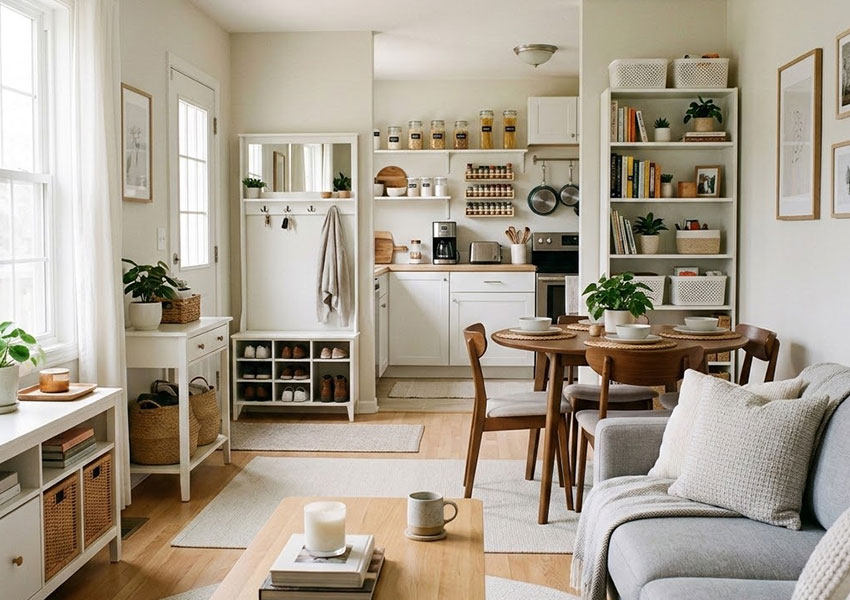
Why Home Organization Matters More Than Ever
A well-organized home isn’t just about how it looks, it directly impacts your mental clarity, productivity, and overall well-being.
Imagine walking into your home after a long day and feeling instantly at ease instead of overwhelmed. That’s the power of an organized space. It allows you to think clearly, move freely, and enjoy your surroundings without visual or mental clutter.
In 2026, more people are embracing intentional living — choosing to declutter not just their homes, but also their routines and lifestyles. Home organization today is less about perfection and more about creating a space that feels calm, functional, and aligned with your daily life.
Whether you live in a compact apartment or a spacious home, the right organization strategies can completely transform your space.
Start with Decluttering & Resetting Your Space
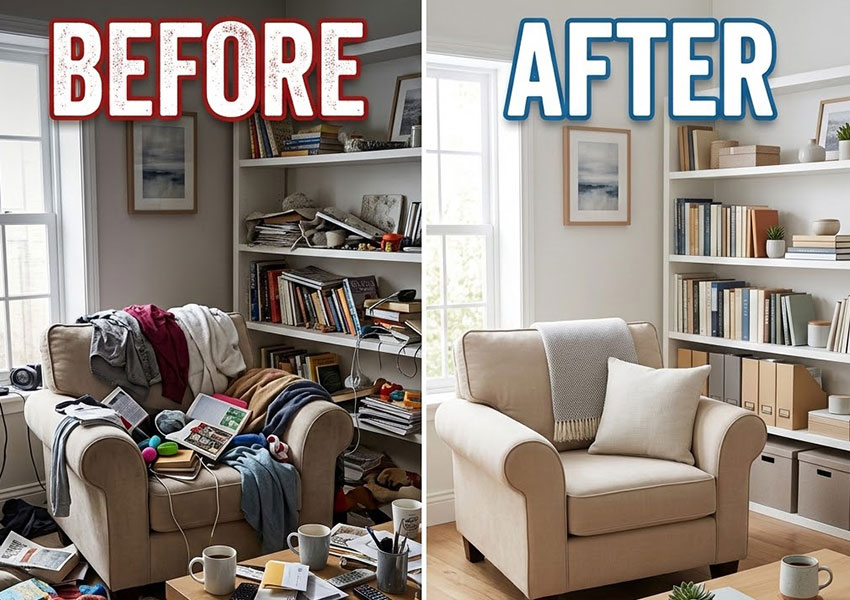
Before organizing, you need to declutter — this is the foundation of everything.
Go room by room and sort your belongings into categories:
-
Clothes
-
Accessories
-
Books
-
Kitchenware
-
Everyday essentials
Take a moment to evaluate each item:
-
Do I actually use this?
-
Does this add value to my life?
-
Would I buy this again today?
If the answer is no, it’s time to let it go.
Decluttering not only creates physical space but also reduces decision fatigue and mental overwhelm. A clutter-free space naturally feels lighter, calmer, and more inviting.
Extra tip: Create three piles — keep, donate, and store. This makes the process less overwhelming and more actionable.
Create Systems — Not Just Storage
The Psychology Behind a Clutter-Free Home
Have you ever noticed how a messy space makes you feel more stressed?
That’s not a coincidence.
Your environment directly affects your mental state. Clutter can:
-
Increase anxiety and overwhelm
-
Make it harder to focus
-
Create a constant sense of unfinished tasks
On the other hand, an organized space:
-
Promotes calmness and clarity
-
Improves productivity
In 2026, home organization is not just about aesthetics — it’s deeply connected to mental wellness and mindful living.
Creating a clutter-free space is essentially creating a calmer mind.
One of the biggest mistakes people make is organizing without creating systems.
Organization is not about stuffing things away — it’s about making your space easy to maintain.
Build simple systems like:
-
A dedicated spot for keys and wallets
-
A daily essentials tray near your entryway
-
Categorized storage boxes for different items
When everything has a place, cleaning up becomes effortless.
This is especially helpful for busy lifestyles where you don’t have time to reorganize every day.
Choose Stylish Storage That Blends with Your Decor
Balance Between Minimalism & Personality
One common mistake people make while organizing is going too minimal — stripping their space of personality.
The key is balance:
-
Keep essentials visible and accessible
-
Display meaningful decor (art, travel finds, handcrafted pieces)
-
Avoid over-decorating surfaces
A well-organized home doesn’t feel empty — it feels intentional.
This is where curated decor pieces, like artisanal items or handcrafted accents, can bring warmth and uniqueness to your space without creating clutter.
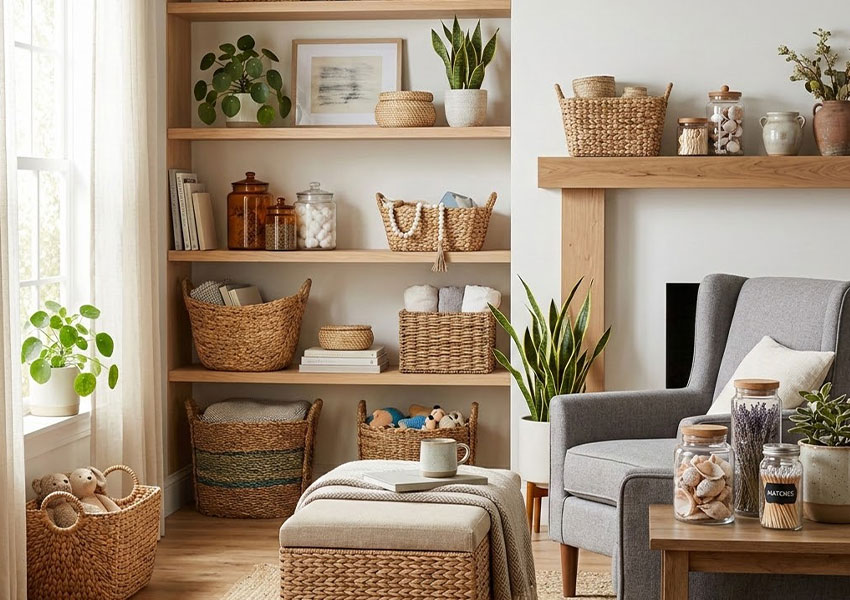
Storage in 2026 is all about looking good while being functional.
Instead of hiding everything, choose pieces that enhance your space:
-
Woven baskets for throws and cushions
-
Decorative jars for pantry essentials
-
Storage stools or ottomans
-
Mosaic tables with hidden compartments
These pieces act as both organization tools and decor elements, making your home feel curated instead of cluttered.
Make Use of Hidden Spaces (Especially Under the Bed)
Hidden storage is one of the easiest ways to maximize space without making your home feel crowded.
Under-bed storage is perfect for:
-
Seasonal clothing
-
Extra bedding
-
Shoes and accessories
Make it more effective:
-
Use storage boxes with wheels
-
Try vacuum-sealed bags for bulky items
-
Keep items categorized and labeled
Adding a bed skirt can keep everything neatly out of sight while maintaining a clean aesthetic.
Closet Organization That Saves Time Every Day
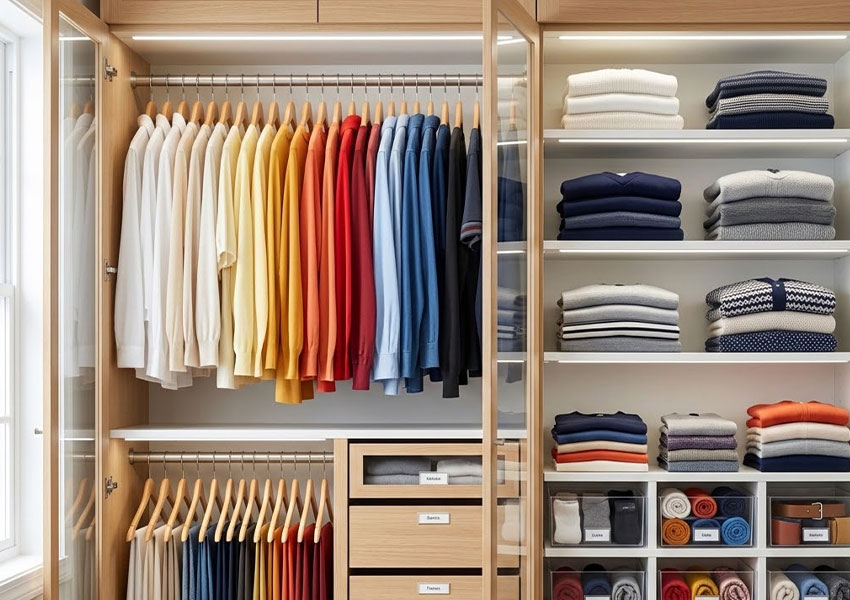
An organized closet can completely change how your day starts.
Start with these simple upgrades:
-
Group similar items together
-
Arrange clothes by color or category
-
Use the folding method to maximize space
Smart additions:
-
Multi-tier hangers to save vertical space
-
Shelf dividers to prevent messy piles
-
Clear bins for accessories
A well-organized closet means:
✔ Faster mornings
✔ Less stress
✔ Better visibility of what you own
Build a Capsule Wardrobe for Less Clutter
If your closet is always overflowing, it might be time to rethink how much you actually need.
A capsule wardrobe focuses on:
-
Fewer, high-quality pieces
-
Versatile clothing that can be mixed and matched
-
Timeless styles over fast trends
Benefits:
-
Saves time getting dressed
-
Reduces clutter instantly
-
Encourages mindful shopping
Instead of having “too many options but nothing to wear,” you’ll have a closet that actually works for you.
Read More: 10 Tips on How to Organize Your Home Office
Upgrade Your Laundry Space
Your laundry area doesn’t have to feel dull or chaotic.
Make it functional and aesthetic:
-
Use baskets to sort clothes
-
Install shelves for detergents and supplies
-
Add hooks for small items
You can even label baskets for whites, colors, and delicates to simplify your routine.
A clean laundry space makes chores feel less overwhelming.
Use Vertical Space to Your Advantage
When floor space is limited, your walls become your best friend.
Try:
-
Floating shelves for books and decor
-
Wall-mounted cabinets for extra storage
-
Hooks for daily essentials
Vertical storage keeps your home organized without making it feel cramped.
It’s especially useful in:
-
Small apartments
-
Kitchens
-
Bathrooms
Invest in Multi-Functional Furniture
In 2026, smart homes are all about multi-purpose living.
Choose furniture wisely:
-
Beds with built-in storage
-
Ottomans with hidden compartments
-
Sofa beds for guests
-
Tables that double as workspaces
These pieces help you maximize space without adding clutter.
Small Changes That Make a Big Difference
Sometimes, the smallest tweaks create the biggest impact.
Try these quick fixes:
-
Install hooks behind doors
-
Use trays to organize surfaces
-
Add drawer organizers
-
Keep frequently used items within reach
These micro-organizing habits make your home easier to maintain daily.
Design a Functional Entryway
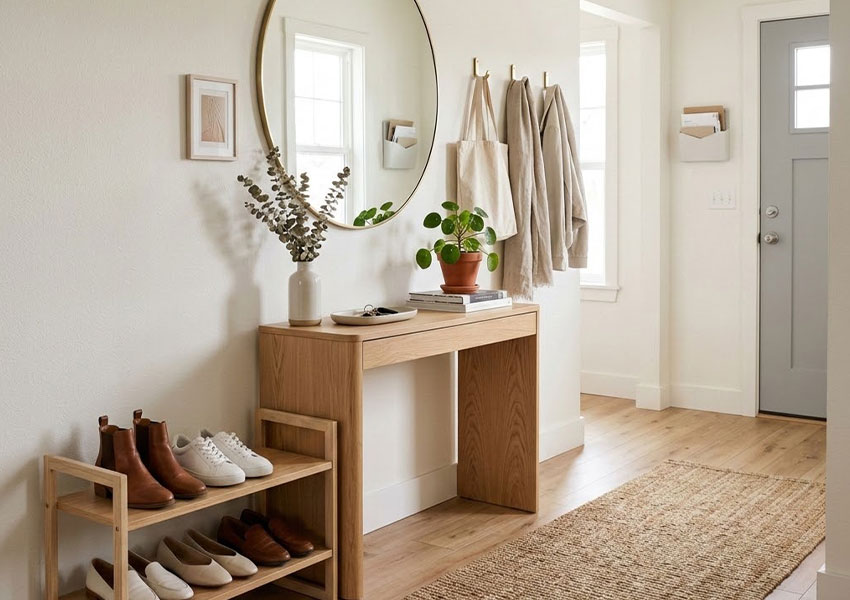
Your entryway is the first and last space you use every day — keep it simple and organized.
Essentials:
-
Shoe rack
-
Hooks or coat rack
-
Small tray for keys and essentials
Add personality with:
A well-organized entryway saves time and reduces daily chaos.
Daily Habits That Keep Your Home Organized
Organization isn’t a one-time task — it’s a habit.
Here are a few simple daily habits that make a huge difference:
-
Spend 5–10 minutes resetting your space every evening
-
Put things back immediately after using them
-
Do a quick weekly reset to maintain order
Small, consistent actions prevent clutter from building up again.
Smart Bathroom Organization
Bathrooms can quickly become cluttered if not maintained properly.
Easy solutions:
-
Wall-mounted cabinets
-
Storage baskets for toiletries
-
Countertop trays for daily items
Digital Decluttering for a Clear Mind
Clutter isn’t just physical — digital clutter can also feel overwhelming.
Declutter your digital space:
-
Organize files into folders
-
Delete unnecessary emails
-
Back up important data
A clean digital environment improves focus and productivity.
Seasonal Organization Habits
Your needs change throughout the year — your home should reflect that.
Practice seasonal swaps:
-
Store winter items in summer
-
Rotate decor
-
Reassess unused items
This keeps your space fresh and prevents buildup over time.
Eco-Friendly Organization for Conscious Living
Sustainability is a key trend in 2026 home organization.
Make mindful choices:
-
Use natural or recycled materials
-
Invest in durable products
-
Avoid unnecessary plastic
An eco-friendly home is not only better for the planet but also creates a healthier living environment.
Common Home Organization Mistakes to Avoid
Even with the best intentions, some mistakes can make organizing harder.
Avoid these:
❌ Buying storage before decluttering
→ You’ll just store unnecessary items
❌ Overcomplicating systems
→ Keep it simple and easy to maintain
❌ Hiding everything away
→ Out of sight often becomes out of mind
❌ Trying to organize everything at once
→ Focus on one space at a time
Organization should simplify your life — not make it more stressful.
Create a Home That Works for You
Home organization isn’t about achieving perfection — it’s about creating a space that supports your life.
When your home is organized:
-
You feel calmer
-
You think clearer
-
You live better
Start small, stay consistent, and focus on what truly works for you.
Because at the end of the day, your home should feel like a space you can relax in, recharge in, and truly enjoy.
Frequently Asked Questions About Home Organization
Q1. What is the best way to start organizing your home?
Start with decluttering first. Remove items you no longer use, then categorize what’s left before assigning proper storage spaces.
Q2. How do I keep my home organized daily?
Maintain simple habits like putting things back after use, doing a quick 10-minute reset each day, and avoiding clutter build-up zones.
Q3. What are the best home organization ideas for small spaces?
Use vertical storage, multi-functional furniture, and hidden storage like under-bed boxes to maximize space efficiently.
Q4. How often should I declutter my home?
It’s best to declutter every 3–4 months or with seasonal changes to keep your home fresh and manageable.
Q5. What are the latest home organization trends in 2026?
In 2026, trends focus on functional decor, eco-friendly storage solutions, and multi-purpose furniture that combines style with practicality.
Q6. How can I organize my home without buying more storage?
Repurpose existing containers, declutter more, and rearrange your current storage systems before investing in new products.